Showing posts with label world war ii. Show all posts

Thursday, August 20, 2026

Americas 250th Birthday Cinemathon #44: Midway (1976)


The Battle of Midway was the great turning point of the Pacific War, just half a year after the Attack on Pearl Harbor that got America into the overall global war. The cause was the Doolittle Raid (discussed in my last review) which is featured in the opening credits of this review’s subject. The ability of the Americans to launch a raid on Japanese soil, no matter how pitifully small, actually gave Admiral Yamamoto approval from high command to draw the Americans into a decisive naval battle. Yamamoto had chafed at the failure to find and destroy the US aircraft carriers at Pearl Harbor and had then been forced to use the Imperial Japanese Navy to support the Army’s conquests across Southeast Asia. A major Japanese victory could set back the American Navy months, buying Japan time to fortify its gains. On June 4, the Japanese and American fleets would clash near Midway Island in what turned out to be an important, perhaps decisive American victory. The loss of four Japanese carriers gave the Americans the momentum they needed to start driving their enemy from their conquests.

Understandably, the Battle of Midway has gotten three major filmed treatments, all historically accurate in terms of what happened. It was the only battle to receive full-fledged onscreen attention in the War and Remembrance mini-series (based on former navy man Herman Wouk’s World War II novels). In 2019 Roland Emmerich released his own movie that tried to be palatable to today’s attention-deficit general audiences, but still failed at the box office (I think it’s a fine film, but could use some extra oomph). This review goes back to the 1976 film, which was a box office hit, but hasn’t aged that well as a piece of movie-making.

Saturday, August 15, 2026

Americas 250th Birthday Cinemathon #43: Pearl Harbor


We finally get to World War II, and we start with one of the more lambasted historical epics. Before we get into the movie itself, here’s a brief historical overview of Pearl Harbor. The United States, despite President Franklin Delano Roosevelt’s desire to get involved, wanted to stay out of the large wars that had broken out in Europe and China during the late 1930s. By 1941, however, the nation was already starting to get entangled. For example, the US was appalled by the horrific atrocities Japan was committing in China, so it decided to cut off oil exports. Needing oil to continue its war in China, the Japanese decided to strike at the American and European colonial powers in a rapid, surprise onslaught. The date of the attack was December 7, 1941 (December 8 if you were in Asia).

Pearl Harbor is considered a great example of a bad movie, though also quite watchable for the most part. Much of the blame for it has been placed on the director Michael Bay, who’s known for many really stupid but financially successful films. However, while Bay does share some blame, it should be noted that Buena Vista Pictures (this is a Disney movie!) had a much bigger say in how Pearl Harbor turned out. Bay had originally wanted an R-rated update on Tora, Tora, Tora (1970), the highly regarded near-documentary on the famous Pearl Harbor attack, taking advantage of CGI and other modern technical innovations.

The studio had other ideas. James Cameron’s historical disaster epic Titanic had just made box-office and Oscar history. Since Pearl Harbor was also a great historical disaster (and one that involved ships, no less), Michael Bay was told to make something similar, a three-hour romance set amid the attack on Pearl Harbor.

Sunday, January 22, 2023

Hitler Strikes Poland: Blitzfrieg, Idelogy, and Atrocity (Alexander B. Rossino)


In Hitler Strikes Poland: Blitzkrieg, Ideology, and Atrocity, Alexander Rossino argues that the war in Poland was in fact the first shots in a war of ethnic annihilation that resumed against the Soviet Union once Adolf Hitler believed that the western powers were no longer a threat to his ultimate goals. In addition to describing the ethnic cleansing carried out by the SS death squads, the  Einsatzgruppen, he does a good job criticizing the myth that the regular Germany Army, the Wehrmacht, was generally opposed to the atrocities for humane reasons and that the soldiers refused to participate or flat-out resisted the killings. He furthermore argues that many of the soldiers committed them quite willingly, with no repercussions for dissent.

The officer class is often romanticized as reluctant victims of Hitler’s control. This was thanks to their post-war memoirs, where they distanced themselves from the Nazis. They also portrayed themselves as competent victims of the Fuhrer’s regime, forced to do Hitler’s bidding. These men do not escape Rossino’s critical eye. When German and generals lower-ranking officers protested the looting and killings carried out by SS men, they were not shocked by the ideological atrocity, but the manner in which it was carried out. They believed that such actions undermined discipline and distracted the troops from their more purely military goals. Many generals did not appreciate Poles and Jews being killed without their authority and without “the court-martial process and other formal procedures”. In other cases, officers in the Wehrmacht collaborated with the Einsatzgruppen in weeding out and disposing of undesirables and had no qualms doing so.

Friday, July 16, 2021

Sean McMeekin's Stalin's War: A New History of World War II

McMeekin, Sean. Stalin’s War: A New History of World War II. New York City: Basic Books, 2021.

Sean McMeekin is known for his work early 20th Century Russian and Ottoman history, with special emphasis on the World War I and Russian Revolution era. In Stalin’s War he takes a deep look into World War II and presents a revisionist narrative that is certain to grab attention. With Stalin’s War, McMeekin seeks to challenge the conventional narrative, that the Second World War was “a heroic struggle between good and evil.” In particular he takes issues with the notion that Hitler was the personal driving force of the worldwide conflict. Instead it should be Stalin, head of the Soviet Union, who encouraged the other great powers to tear each other apart so that his communist nation could swoop in and exert its power over the world. McMeekin points out that Stalin’s influence was felt in both the European and Pacific Wars, while Nazi Germany only had a significant role in the former.

The Nazi-Soviet non-aggression pact enabled Stalin to make a series of easy conquests in Eastern Europe while the Germans fought a much tougher war against the Western Allies.  The Soviets got into a brief war with the Japanese, but were successful. Instead of using their leverage to drive back the Japanese for good, the Soviets gave them a free hand to continue their war with China. This kept Japan and Chiang’s Nationalists embroiled in the slog of war, while Mao’s Communists were able to sit back in their northern strongholds (McMeekin also points out that after 1945 the Soviets gave ample military resources to Mao with which to conquer China. The Americans by contrast withheld aid from Chiang and demanded that he form a peaceful government with the Communists, a totally unrealistic expectation). Stalin’s goal of making the great powers wear each other down through attrition was thrown off when Hitler struck him and rolled back all his 1939-1941 conquests. Now he had to go to the Western Allies for aid.

Monday, June 28, 2021

Louis Allen's Burma: The Longest War, 1941-1945 (Book Review)


Allen, Louis. Burma: The Longest War, 1941-1945. Harry N. Abrams, 2019. London Phoenix Press, 1984.

The Burmese front in World War II is called the “Forgotten War”. In fact it was referred to as this even while it was still being fought. In Southeast Asia, it was the lowest on the Allies’ priorities in supply and strategy. Thus it is often overlooked, though there is sizeable literature on the subject. One of the most valuable sources on this front is Louis Allen’s The Longest War. Allen actually served there as an intelligence officer. With his wartime intelligence work and knowledge of the Japanese language, he not only relied on British sources, but also delved into Japanese ones through archival material and interviews with veterans (there were more survivors from continental than island fronts, as soldiers had somewhere to withdraw if defeated). Thus, unlike many other works on the Burma Campaign, the Japanese side of the story is exhaustively covered.

Friday, October 23, 2020

Ten Battles from the Second Sino-Japanese War (1937-1945)


The Second Sino-Japanese War was one of the largest yet overlooked fronts of World War II. In this theatre of war Chiang Kai-Shek’s Nationalist government forces and Mao Tse-Tung’s Communists forged an uneasy alliance to stave off Japanese conquest. After victory was achieved, they quickly turned on each other. Though it was the first theatre of war to open up, predating Nazi Germany’s attack on Poland by two years, little has been written about it beyond the opening phases. Many sources and documents were destroyed by the upheaval of the continuing Chinese Civil War and then Mao’s Cultural Revolution. Information from Chinese or Taiwanese scholars are often heavily slanted in favor of the Communist or Nationalist causes or simply difficult to translate, while Japan’s presentation of its role in World War II is often purposefully hazy. Here are ten battles from an often ignored front of World War II, a couple fairly well-known and the others not so much.


#1: Shanghai (August 13 – November 26, 1937)


Shanghai was a major world economic center with thousands of foreign residents. It was therefore a natural target for Japanese military planners, who hoped to end the war with one swift blow. Chiang Kai-Shek also hoped to end the war soon. Thus both sides continuously funneled reinforcements into a desperate bid for quick victory. The battle itself largely took place within the city itself, resulting in furious and confusing building-to-building fighting. Ironically many Chinese units were led into battle by their German advisers (Germany was already under Nazi control and was turning towards an alliance with Japan).[1] The battle was a grueling stalemate, the Chinese using their numerical advantage to counter Japan’s advantage in aircraft and tanks. This changed in mid-November when the Japanese 10th Army arrived and made a major breakthrough with an amphibious operation.[2] The Chinese army was sent retreating towards Nanking. China had lost much of its industrial base as well as many of its best units. However, it displayed a newfound determination to resist decades of Japanese aggression. The Chinese lost over 250,000 out of 750,000 men while the Japanese lost about 40-60,000 out of 300,000.[3] The latter army would soon seize Nanking and commit one of the greatest atrocities of the 20th Century.

Monday, January 27, 2020

Ten World War II Films to Watch


No war has gotten more time on theater screens than World War II. With its all-encompassing nature, diverse cast of characters and battles, and for many relatively clearer tale of good against evil, it makes for a very attractive cinematic subject. Also, being so recent, there is still plenty of original gear to use from tanks to uniforms to guns. That certainly saves filmmakers the trouble of building replicas from scratch. With so many World War II films out there, I thought I’d make a list of ten great films. This is not a list of the top ten films, though I only chose ones I consider to be at the least very good. I have tried to make a list that covers various aspects from the Holocaust to partisan warfare to the Nazi hierarchy. If you want to learn some history through movies, than watch these ten.

Before starting the list I have to recommend HBO’s Band of Brothers and The Pacific. They’re mini-series, not movies, but they are must-see due to their accuracy. I should also note that I only include films based directly on real people or events, so no Saving Private Ryan or one of those special mission action films like Dirty Dozen.

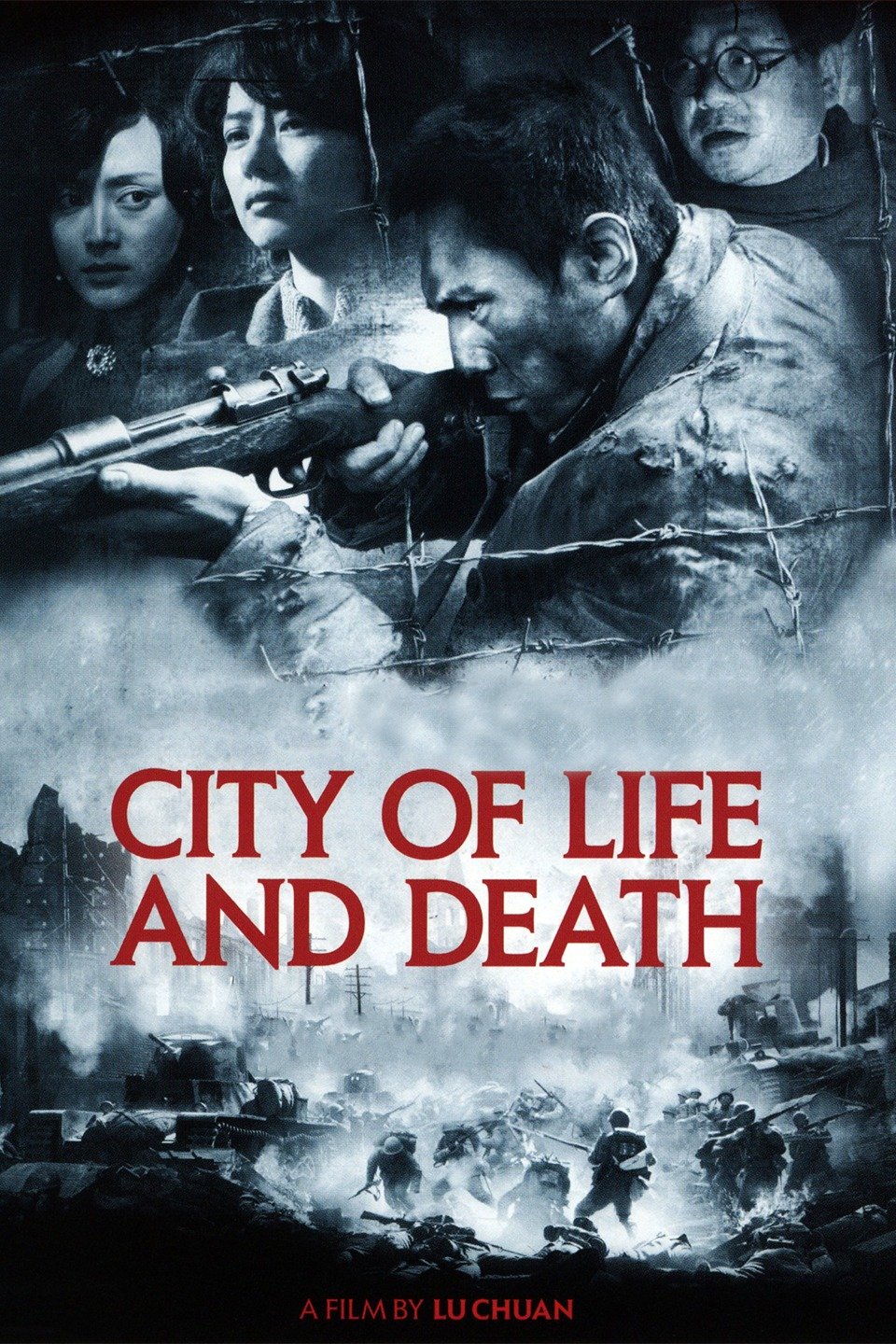
#1: City of Life and Death (2009)
Image result for city of life and death (2009)
The Sino-Japanese War does not get much play in Western film. There are plenty of Chinese movies on the subject, but they're hard to track down or rife with propaganda. One sub-topic that has lent itself well to film is the Rape of Nanking. In late 1937 the Japanese captured the Chinese capital of Nanking and embarked on one of the greatest streaks of terror in human history. At least tens of thousands of Chinese civilians were slaughtered, often with torturous methods. Almost as many women, ranging from young girls to the elderly, were raped, and many of these victims were killed afterwards. It’s a war crime matching and usually exceeding any incident in Hitler’s war with Russia.

Tuesday, January 14, 2020

John Broich's Blood, Oil, and Axis (book review)


Image result for blood oil axis

Broich, John. Blood, Oil, and the Axis: The Allied Resistance Against a Fascist State in Iraq and the Levant, 1941. Harry N. Abrams, 2019.

World War II was a massive war and many fronts and battles remain unknown by the general public. John Broich tells the story of a forgotten campaign in which British Commonwealth forces faced off against Vichy France and several indigenous foes in the Middle East. Broich believes that this was a campaign that, if had gone the other way, could have spelled doom for the British Empire.  If the Axis Powers had gained control of the region, it would have access to plenty of oil, as well as the means to transport it back to Europe via Syria. It would also be closer to taking the Suez Canal, thus hamstring British supply, and to India, which might feel inspired to rebel against Britain. Iraq at the time was nominally independent, but heavily controlled via British influence. Thus it was not a stretch for Iraqi or other Mid-Eastern groups, most notably the pro-Nazi Golden Square, to side with the Axis Powers out of nationalist aspirations. Bordering Iraq to the west was Syria. Its current ruler, Vichy France, was under immense pressure from Germany to supply aid if requested.

Broich’s work is more narrative than argumentative. He chooses a cast of characters to focus on, from Francophile American Jack Hasey to Palestinian interpreter code-named Reading to traveling writer Freya Stark to Nazi liaison in Vichy Syria Rudolf Rahn. Regardless of whether or not they were officially in the military or a member of the belligerent nations, they all felt a need to defy or assist the Axis. The book is thus full of personal stories to help connect with events of the ground. It also is infused with a great deal of tragedy. Perhaps one reason this front is often overlooked is the make-up of the two sides, which does not gel with the favored good vs. evil narrative. The Axis forces consisted of few Germans, mainly Luftwaffe planes coming in from Greece and the Mediterranean. Instead it was primarily made of Iraqis, French, and French colonial troops. Most tragic of all was that Free French with the British fought with Vichy French. Also, at the beginning of most chapters, Broich provides quotes related to America’s recent and ongoing war in Iraq. He seems to suggest a comparison, but aside from the geographic locations and western interventionism he doesn’t elaborate.

While Broich’s book reveals an oft-ignored aspect of World War II, it fails to be truly great thanks to a couple minor flaws. One is that Broich too broadly employs the “fascist” and “anti-fascist” label for characters and factions in the Middle East. Some were undoubtedly attracted to fascism and some were opposed to it. But Broich shows within his own text that most Arabs, Palestinians, Jews, and others were not primarily concerned with growing or fighting fascism, if at all, but with nationalist aspirations or personal honor (for example, many of the Indian troops volunteered to gain prestige in their village, not to battle fascism or serve the British Empire). A second nitpick is Broich’s failure to follow up on his argument, even within a narrative style. He argues that if Hitler had focused his energies on the Middle East rather than the Soviet Union, he could have knocked out Britain. It would have helped if he set some time aside to examine Hitler’s ideology and motivations in regard to coming after the Soviet Union in 1941, and why he possibly would not have considered prioritizing the Middle East.

Overall, Blood, Oil, and Axis is full of information and stories rarely told. Whoever wants to broaden his or her knowledge of World War II should give this a look. It also provides material for those who like to imagine alternate scenarios.

Rating: Highly Recommend

Broich, John. Blood, Oil, and the Axis: The Allied Resistance Against a Fascist State in Iraq and the Levant, 1941. Harry N. Abrams, 2019. Buy the book here.

Rating System

Must-Read: Definite read for history in general
Highly Recommend: Definite read within a certain subject
Recommend: Good for further information or into on a certain topic
Adequate: Useful if looking for further information certain topic
Pass: Awful, only useful for examining bad or ideologically-tainted history